Last updated 2026-08-19
TL;DR
Radon mitigation lowers indoor radon, usually with a fan that pulls soil gas from under a slab or crawl and vents it above the roof. EPA recommends a fix at 4 pCi/L or higher. To start the trade you train to a recognized standard, get a national credential if your market uses one, then confirm whether your state licenses mitigators. Confirm fees with the board that collects them. A national card is not a license.
What is radon mitigation?
Radon mitigation is the work of lowering indoor radon gas, most often by pulling soil gas from under a slab or crawl space with a dedicated fan and vent pipe. EPA recommends a fix when a home tests at 4 pCi/L or higher. [2] The goal is a lower post-mitigation test. The pipe does not need to be pretty.
That definition is boring on purpose. You are not selling scented air. You change the pressure under a building so soil gas goes up a pipe instead of into a bedroom.
Radon is a radioactive gas from the decay of uranium in soil and rock. CDC describes it that way and ranks radon as the second leading cause of lung cancer. [11] EPA estimates about 21,000 radon-related lung cancer deaths each year in the United States. [1] That 21,000 figure comes from EPA's 2003 Assessment of Risks from Radon in Homes (EPA 402-R-03-003). [4]
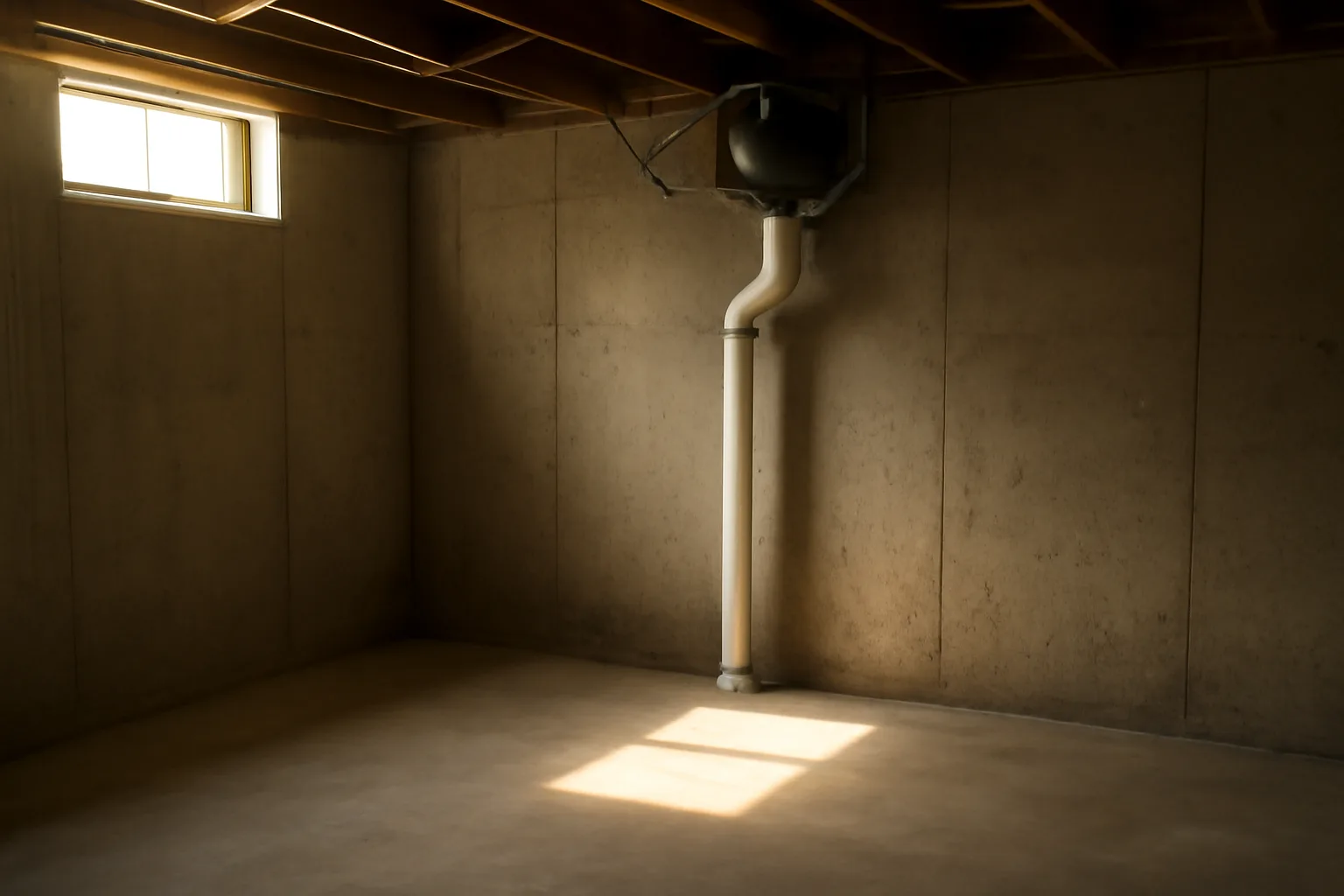
Most houses get active soil depressurization. A contractor cores a suction pit, hangs PVC, mounts an inline fan, and terminates the exhaust above the roof and away from openings. Big slab cracks and open sumps get sealed so the fan is not sucking basement air. Crawl spaces often get a heavy membrane plus suction under that sheet.
Other methods exist. Heat recovery ventilators dilute indoor air. Block-wall suction shows up on some block foundations. I would not lead with unproven additives. They waste money while the soil-gas path stays open.
Congress set a long-term national goal in the Indoor Radon Abatement Act. The statute says, "The national long-term goal of the United States with respect to radon levels in buildings is that the air within buildings in the United States should be as free of radon as the ambient air outside of buildings." [6] Outdoor air usually runs well under 0.5 pCi/L. Indoor work almost never hits that. You still aim as low as the building and the fan will reasonably go.
Write that definition on the van door. Clients ask what you do. Answer in one sentence, then show them the manometer.
How do you start radon mitigation?
You start radon mitigation by testing the building, reading the number against EPA's 4 pCi/L action level, and only then changing the structure. If you want this as a business, you start with training and the license question in your state, not with a truckload of PVC. Confirm every fee and form with the board that collects it.
Homeowners can stop at hire someone. You are not that reader. You want the paper path.
Here is the order I would actually use.
First, test or require a valid test. Short-term kits run two to seven days. Long-term kits run 90 days or more and smooth out weather noise. EPA's citizen guide is still the clean public statement. Fix the home at 4 pCi/L or higher. [2] WHO set a tighter reference level of 100 Bq/m3, which is about 2.7 pCi/L. [5] Some buyers ask about that number. Know both. Do not pretend the United States adopted the WHO figure. It did not.
Second, look up your state radon office. EPA keeps a finder page that points to state programs and to the two national certification bodies, NRPP and NRSB. [12] Illinois, New Jersey, Pennsylvania, Florida, Ohio, and other states put legal controls on who may mitigate. Florida's section 404.056 is a clear example of certification and disclosure written into statute. [7] Pennsylvania puts operating rules in 25 Pa. Code Chapter 240. [8] Other states have no radon license at all. A national certificate helps. It is not a state license unless that state says it is.
Third, take a course that tracks current ANSI/AARST soil gas standards, then sit the exam your market recognizes. Fourth, buy insurance a real estate attorney will not laugh at. Fifth, pull local mechanical or building permits if the city wants them. Fan installs often trip electrical rules even where radon itself is unlicensed.
Do not skip the state call. People print a national card, bid a job in a licensed state, and get shut down. That is a dumb way to learn geography.
One sequence to remember: test, train, ask the state, then cut concrete.
What radon level means you should mitigate?
EPA recommends mitigation at 4 pCi/L or higher after a valid test. [2] Consider a fix between 2 and 4 pCi/L if the client wants a lower number. There is no honest indoor zero. Outdoor air is the real floor.
EPA's public line is simple. The Citizen's Guide tells people to fix a home at 4 pCi/L. [2] On its health-risk page EPA also states, "Radon is the number one cause of lung cancer among non-smokers, according to EPA estimates." [1] That sentence is why a closing stalls when a test prints 4.2.
WHO's handbook set 100 Bq/m3 (about 2.7 pCi/L) as a national reference level countries should not exceed. [5] That is a policy choice, not a hidden U.S. code. If a client wants WHO level, price the extra sealing or extra suction honestly. You may not get there on a leaky block basement.
| Reference | Level | What it means |
|---|---|---|
| EPA action level | 4 pCi/L | Fix recommended after a valid test [2] |
| WHO reference level | 100 Bq/m3 (about 2.7 pCi/L) | International reference, not a U.S. statute [5] |
| Indoor Radon Abatement Act goal | outdoor-equivalent air | Long-term statutory goal, not a contractor spec [6] |
EPA mapped the country into three radon zones. Zone 1 counties have a predicted average indoor screening level greater than 4 pCi/L. [14] Zone 1 is not a test result. Zone 3 houses print double digits. Zone 1 houses print 0.9. Test the building in front of you.
Device choice matters. A two-day charcoal test during a storm can lie. A 90-day alpha track test is quieter. Continuous monitors give hour-by-hour traces that help you spot a failed fan later. Follow the device instructions and any state protocol. If your state licenses measurement separately from mitigation, do not blur those cards.
I mitigate at 4. I talk seriously at 3. I do not scare people at 1.2. That is my line. Yours can be tighter. Just do not invent a legal duty your state never wrote.
How does a radon mitigation system actually work?
A typical system works by making the soil under the house a little lower in pressure than the indoor air, so soil gas flows to a fan instead of through the slab. The fan runs all the time. A U-tube manometer on the pipe shows that suction is present. Post-mitigation testing shows whether the indoor number actually dropped.
Active soil depressurization is the workhorse. You pick a suction point: a pit cut in the slab, a sealed sump lid, or the space under a crawl-space membrane. Schedule 40 PVC is common. The fan sits in an attic, garage, or outdoor chase so the house is not listening to it at 2 a.m. Exhaust goes above the roof eave and away from windows. That last detail is not decoration. You can re-entrain the radon you just pulled.
Sealing helps. Open dirty-leg sumps, big control joints, and crawl dirt are leaks. You will not caulk a whole house airtight, and you should not try. Seal the leaks that steal suction.
System design for existing homes lives in ANSI/AARST SGM-SF. [10] That standard is what serious training tracks now. EPA's old Radon Mitigation Standards (EPA 402-R-93-078) are historical. Do not build a company on a 1993 pamphlet.
Pressure field extension testing tells you if one suction point covers the slab or if you need a second. I would rather drill a second pit than leave a far bedroom at 6 pCi/L. Fans have a performance curve. A cheap fan on a tight pit can be fine. A cheap fan on a gravel-less clay site will just howl.
Label the system. Show the client the manometer. Tell them the fan is a wear part. A dead fan is a radon system that became a pipe.
Passive stacks without fans show up in some new houses built with radon-resistant features. They help. They are not a promise. If the house still tests high, you add a fan. That is a small job if the pipe is already there.
Do you need a license to mitigate radon?
Sometimes. Several states require a radon mitigation license or certification before you can charge for the work. Many states do not. You have to ask the state radon office for the county you will work in. A national NRPP or NRSB card does not replace a state license where one exists.
That is the whole national myth. People talk like there is one American radon license. There is not.
Florida wrote certification and disclosure duties into section 404.056, Florida Statutes. [7] Pennsylvania runs certification through 25 Pa. Code Chapter 240. [8] Ohio puts radon licensing in Ohio Administrative Code Chapter 3701-69. [9] New Jersey has required certification of testers and mitigators for decades. Other states require nothing radon-specific beyond ordinary contractor and electrical rules.
| Place | What you actually check |
|---|---|
| Florida | Certification and disclosure duties in s. 404.056 [7] |
| Pennsylvania | Operating rules in 25 Pa. Code Chapter 240 [8] |
| Ohio | Licensing in OAC Chapter 3701-69 [9] |
| Many other states | No radon-specific license. Still pull local permits. |
EPA's professional finder page sends you to your state radon office first, then to NRPP and NRSB. [12] That order is correct. Call the state. Ask three things: do you license mitigation, what course list do you accept, and what is the current application packet. Confirm the fee on that board's fee page. Fees move. I will not invent one here.
License and price notes also split by market. If Florida or Georgia is on your map, read radon mitigation cost in florida and radon mitigation cost in georgia after you call the board, not instead of calling.
Cities still want permits. A roof penetration and a 120-volt fan are building and electrical work even in an unlicensed radon state. Skip that and you own the leak.
If you work across a state line, treat it as a new business. Reciprocity is uneven. Some boards honor NRPP plus an application. Some make you sit their exam. Read the form.
What training and credentials do new mitigators use?
New mitigators usually take a multi-day mitigation course that follows current AARST/ANSI soil gas standards, then sit for NRPP or NRSB mitigation certification if their state or their buyers want that credential. After that they file any state license application the board requires. Confirm course approval and exam rules with that board before you pay tuition.
NRPP (National Radon Proficiency Program) and NRSB (National Radon Safety Board) are the two names EPA lists for national certification. [12] They are not federal licenses. They are private credentials that states and clients recognize at different rates.
Course length often lands in the 16 to 24 hour range for a mitigation-only class, sometimes longer when measurement is bundled. I am not going to quote a tuition, because schools change it. Ask two schools. Pick the one whose syllabus cites SGM-SF and includes field diagnostics, more than slideshow trivia.
Measurement certification is a separate card in a lot of programs. If you will test your own post-mitigation jobs, check whether your state lets a mitigator also measure, or whether it wants an independent tester. That conflict rule is real in some states and absent in others.
Insurance is part of training in the adult sense. Get general liability that names radon work. Ask about pollution riders. Some carriers still blink. Start those calls early.
If you want the forms and a study path in one binder, the RadonPath $149 one-time NRPP Mitigation Kit is built for that paperwork grind (see /start). Use it or do not. The state packet still wins.
Continuing education exists once you are certified. Log it. Lapsed cards are how you lose a closing.
How much does radon mitigation cost to install?
EPA's consumer guide has long put a typical residential radon mitigation system between about $800 and $2,500. [3] Real bids run lower on a simple slab with an easy attic run and higher on large homes, drain-tile complications, or multi-family work. Get local numbers. National averages lie a little.
Labor and PVC prices moved after that EPA range was written. Treat $800 to $2,500 as the agency's published band, not a current invoice. I have seen simple one-fan jobs land near the low end in cheap labor markets and crawl-plus-slab jobs blow past the high end. Nobody has a clean national dataset that I trust for this year.
Your bid should separate diagnostics, the mechanical system, electrical, sealing, and the post-test. Itemize. Clients compare you to a cousin with a wet vac. Show them why a roof termination and a rated fan cost money.
State pages that track local cost notes help more than a U.S. mean. Start with radon mitigation cost in alabama, radon mitigation cost in alaska, radon mitigation cost in arizona, and radon mitigation cost in arkansas if those are your markets. Same idea for radon mitigation cost in california and radon mitigation cost in colorado. Read them as local context, not a price list you can paste into a contract.
Do not compete on the cheapest fan. A failed fan in month eight is how you buy the job twice. I would rather lose a bid than install a no-name unit with no replacement path.
Operating cost is mostly electricity. A typical inline fan draws tens of watts, not a space heater. Tell the client that. They will ask.
Can a homeowner do radon mitigation themselves?
A handy homeowner can install a simple active soil depressurization system in an unlicensed state, and some do. I still would not, unless they will follow SGM-SF details on termination, fan rating, and sealing, then pay for an independent post-test. In licensed states, paid work by an uncertified person can be illegal.
EPA tells the public they may install their own system and also recommends trained contractors. [3] Both sentences can be true. The failure mode is a pipe that dumps under a soffit, a fan in the living space, or a sump left unsealed.
Electrical is the other trap. Many fans need a disconnect and a GFCI-protected circuit. Roof flashing leaks. Condensate in cold attics ices a pipe if you skip the slight slope back to the pit.
If you are the new contractor, do not sneer at DIY clients. Offer a diagnostic and a post-test. That is honest work. Do not fix their pipe off the books in a licensed state.
For your own first house, DIY is a decent classroom if the state allows it. Take photos. Measure the pressure field. Then go take the real course. Practice on your slab is not the same as a credential.
What paper follows you through the first year?
First-year paper is the state license file (if any), your national credential, insurance certificates, permits, written contracts, device records, and post-mitigation test reports. Keep them where you can find them on a Friday when a realtor calls. Confirm retention rules with your board. I am not inventing a year count for you.
Write a one-page contract. Scope, price, what success means (a post-test under 4 pCi/L is the usual public benchmark, not a warranty of zero), who pays if a second suction point is needed, and that the fan is a wear item. Get a signature before you core the floor.
Photograph the slab, the pit, the fan label, the roof jack, and the manometer on day one. Those photos settle arguments.
If you use continuous monitors, keep calibration certificates. Some states specify device lists. Kansas State's National Radon Program Services site is a practical national clearinghouse for mitigation method summaries and for finding programs. [13]
Sales tax, contractor registration, and workers' comp are still in play. Radon paper does not replace ordinary business paper. That surprises people who think the NRPP card is a company.
Set a reminder for credential renewal and CE hours the day you pass the exam. First year is when people forget.
How do you prove the system worked?
You prove a system worked with a post-mitigation radon test, run after the fan has been on long enough for the house to stabilize, using a valid device and protocol. The manometer only proves suction. The test proves indoor air.
EPA's consumer materials tell people to retest after mitigation and to test again every two years, or after major renovations. [3] I retest sooner if the first post-test is barely under 4 pCi/L.
Closed-house conditions still matter. If the client leaves every window open, you will like the number and hate the callback.
Independent testing is cleaner in real estate deals. If your state forbids the installer from doing the clearance test, hire it out. Do not play cute with chain of custody.
A system that leaves the house at 3.8 pCi/L worked against the EPA action level. A client who wanted 2.0 may still be unhappy. Put the target in the contract.
If the number does not drop, you diagnose. Dead fan, frozen pipe, open window next to the exhaust, or a slab that needs a second pit. Pressure field extension testing is how you stop guessing.
What standards should a new crew actually follow?
Follow the current ANSI/AARST soil gas mitigation standard for the building type in front of you, plus your state code and the electrical code. For most existing houses that means SGM-SF. [10] EPA points the public to trained contractors and to state programs rather than to its retired 1990s mitigation pamphlet. [12]
SGM-SF covers system design, pipe, fans, labeling, and documentation for existing homes. Other AARST standards cover new construction, multifamily, schools, and measurement. Buy the standard that matches the job. Reading a summary blog is not the same as reading the standard.
State rules can be stricter. When they conflict, the legal requirement wins. The standard still makes you a better installer.
I would not invent house-brand methods in year one. Active soil depressurization is boring and it works. Save experiments for your own garage.
Worker safety is easy to skip and dumb to skip. You are cutting concrete, working roofs, and crawling dirty spaces. The radon dose on a single house is not the thing that sends you to urgent care. Ladders and dust will. Gloves, eye protection, and a real ladder are not optional.
What should you skip in year one?
Skip miracle filters sold as a full replacement for soil depressurization. Skip unpermitted electrical. Skip bidding states you have not called. Skip buying every tool on a supplier starter list. A core drill, a decent vacuum, a micromanometer, and a safe way onto the roof will take you farther than a vinyl-wrapped trailer.
Skip lifetime radon warranties you cannot price. Fans die. Slabs crack. Houses get additions. Offer a workmanship period you can stand behind and a clear retest policy.
Skip arguing with clients about whether radon is real. EPA's risk assessment already had that fight. [4] Point at 4 pCi/L and do the job.
If you want a second pass on the paperwork after you have read this, RadonPath keeps the kit and the start page at /start. The article above still works if you never click it.
Last thing. Call the state. Then cut the slab.
Frequently asked questions
What is radon mitigation?
Radon mitigation is any building change that lowers indoor radon, usually an active soil depressurization fan and sealed suction under a slab or crawl. EPA recommends a fix at 4 pCi/L or higher. Success is a valid post-test, not the look of the pipe. Confirm any state rules before you charge for the work.
How do you start radon mitigation?
Test the building first, then train to a current AARST/ANSI soil gas standard. Get NRPP or NRSB credentials if your buyers or board want them. Ask your state radon office whether mitigation is licensed. Confirm fees and forms with that board. Pull local electrical or building permits. Only then cut concrete.
What is the EPA radon action level?
EPA recommends fixing a home when a valid test is 4 pCi/L or higher. That is a public health action level, not a magic safe/unsafe line. WHO uses a tighter 100 Bq/m3 reference (about 2.7 pCi/L). The United States did not adopt the WHO number as a legal limit. Some clients still ask you to chase it.
How much does a typical radon mitigation system cost?
EPA's consumer guide has long published a typical residential range of about $800 to $2,500. Labor, crawl work, and multi-fan houses can sit outside that band. Treat the EPA range as an agency figure, not this year's invoice. Get two local bids and confirm permit costs with the city.
Is an NRPP or NRSB card a state license?
No. NRPP and NRSB are national private credentials. EPA points people to them and to state radon offices. Florida, Pennsylvania, Ohio, and other states run their own legal programs. A national card helps. It does not replace a state license where one exists. Confirm status with the board before you bid.
How long does a radon mitigation install take?
A simple one-fan slab job is often a single day on site once materials and permits are ready. Crawl membranes, extra suction points, and hard roof runs add time. The fan then needs run-time before a valid post-test. I would not promise a same-week clearance number on a complicated house.
How often should you retest after mitigation?
Retest after the system is running and the house has stabilized, then again about every two years, or after major renovations. That cadence matches EPA consumer guidance. Retest sooner if the first post-test is barely under 4 pCi/L or if the manometer shows lost suction. A dead fan is a failed system.
Can you mitigate a crawl space the same way as a slab?
The physics is the same (pull soil gas, vent it high) and the hardware is different. Most crawls get a sealed membrane and suction under that sheet, not a single core in dirt. Leaks around piers kill performance. Budget more labor. A cheap open-crawl fan with no membrane is usually a waste of money.
Is radon only a basement problem?
No. Soil gas can move into any level through slabs, utility penetrations, and floor cavities. Slab-on-grade houses and rooms over crawls test high all the time. EPA zone maps do not excuse skipping a test on a first-floor ranch. Test the lowest lived-in level, then decide.
What does the U-tube manometer on the pipe tell you?
It tells you the fan is moving air and that some suction exists in the pipe. It does not tell you the indoor radon number. Clients love watching the liquid move. You still need a post-mitigation test. A manometer at zero usually means a dead fan, a disconnect, or a major pipe leak.
Do new homes still need radon mitigation?
Yes, if they test high. Radon-resistant new construction (a pre-piped stack, sealed sump, gravel) makes a later fan cheaper. It is not a guarantee. Passive stacks without fans fail often enough that you should still test. If the number is at or above 4 pCi/L, add the fan.
Who regulates radon mitigators?
States that chose to. There is no single federal radon contractor license. EPA funds information and points the public to state offices plus NRPP and NRSB. Florida s. 404.056, 25 Pa. Code Chapter 240, and Ohio OAC 3701-69 are examples of real state paper. Confirm your county with the board that would fine you.
Sources
- U.S. EPA, Health Risk of Radon: EPA estimates about 21,000 radon-related lung cancer deaths per year and calls radon the second leading cause of lung cancer and the leading cause among non-smokers.
- U.S. EPA, Consumer's Guide to Radon Reduction: EPA publishes a typical residential mitigation cost band of about $800 to $2,500 and advises post-mitigation retesting and the option of DIY or a trained contractor.
- U.S. EPA, Assessment of Risks from Radon in Homes (EPA 402-R-03-003): EPA 402-R-03-003 is the technical risk assessment behind the agency's roughly 21,000 annual U.S. radon lung cancer death estimate.
- World Health Organization, WHO Handbook on Indoor Radon: WHO recommends a national reference level of 100 Bq/m3 (about 2.7 pCi/L) for indoor radon.
- United States Code, 15 U.S.C. § 2661 (Indoor Radon Abatement): Federal law states the national long-term goal that indoor air should be as free of radon as outdoor ambient air.
- Florida Statutes § 404.056 (2023): Florida statute 404.056 writes radon certification and real estate disclosure duties into state law.
- 25 Pa. Code Chapter 240, Radon Certification: Pennsylvania regulates radon certification of testers and mitigators in 25 Pa. Code Chapter 240.
- Ohio Administrative Code Chapter 3701-69: Ohio licenses radon testers and mitigation specialists under OAC Chapter 3701-69.
- AARST/ANSI SGM-SF-2023, Soil Gas Mitigation Standards for Existing Homes: SGM-SF is the consensus standard that current residential soil gas mitigation training and system design track.
- CDC, About Radon: CDC describes radon as a radioactive soil gas and ranks it as the second leading cause of lung cancer.
- U.S. EPA, Find a Radon Test Kit or Measurement and Mitigation Professional: EPA directs the public to state radon programs first and lists NRPP and NRSB as the national certification bodies.
- Kansas State University National Radon Program Services, Mitigation: The EPA-funded National Radon Program Services at Kansas State publishes national mitigation method summaries and program-finding help.
- U.S. EPA, EPA Map of Radon Zones: EPA Zone 1 counties have a predicted average indoor radon screening level greater than 4 pCi/L.