Last updated 2026-08-18
TL;DR
Alaska has no state radon mitigation license. You get certified instead through the National Radon Proficiency Program (NRPP) or the National Radon Safety Board (NRSB), the two credentials the Alaska Radon Program recognizes for its voluntary list. Mitigation follows the EPA national average near $1,200 but runs higher in Alaska because of shipping and crawlspaces. Most installs take a single day. A state business license is separate and required.
Do you need a license for radon mitigation in Alaska?
No. Alaska does not require a state-issued license to install radon mitigation systems. The Alaska Department of Environmental Conservation's Radon Program says so plainly on its Professionals page: "The State of Alaska does not have a licensing or certification program for radon professionals." [1] You can legally do the work without any state-specific credential.
That does not mean you can skip certification. Almost no serious buyer, agent, or lender will hire an uncredentialed mitigator. The Alaska Radon Program keeps a voluntary list of qualified professionals, and only people holding a national certification from the National Radon Proficiency Program (NRPP) or the National Radon Safety Board (NRSB) make that list. [1] The certification is the real paper path here. (For a state that does license, see radon mitigation license in California.)
What is the Alaska Radon Professional Certification Program?
It is a voluntary listing, not a license. The Alaska Radon Program publishes a directory of measurement and mitigation professionals who meet its criteria. To get listed, you hold an active NRPP or NRSB certification in the right category (measurement, mitigation, or both), you show proof of liability insurance, and you send in an application. [1] The state does not test you. It verifies the national credential you already earned.
Being on the list helps with homeowner trust and referrals. You can still legally work without it. If you want to show up when Alaskans search the state's radon site, this is how you get there.
How to become nationally certified for radon work in Alaska
Alaska recognizes two certifying bodies: NRPP and NRSB. Most professionals in the state pick NRPP because it is more widely used. The NRPP mitigation path runs like this: finish an approved 16-hour radon mitigation course, pass the NRPP Mitigation Certification Exam, submit your application, and pay the fees (currently $165 for the exam and $165 for the initial two-year credential). [7][8]
You can take the course online or in person. Some in-state training shows up through the University of Alaska Fairbanks Cooperative Extension Service, which offers radon courses from time to time. [10] After you certify, you keep it current with 16 hours of continuing education every two years.
How much does radon mitigation cost in Alaska?
EPA guidance puts a typical radon system between $800 and $2,500, with a national average near $1,200. [2] In Alaska, plan to pay more. Material shipping costs more, work sites are remote, and crawlspaces are everywhere, which sometimes means extra membrane and more suction points.
No state-specific price survey exists. That said, contractors around Anchorage and the Mat-Su Valley commonly quote $1,500 to $3,500 for a standard active soil depressurization system. A home with a full basement often lands on the lower end. A tangled crawlspace layout or multiple suction points runs higher. Get at least three bids before you sign anything.
How long does radon mitigation take in Alaska?
Most single-family installs finish in one day. The EPA's Consumer's Guide to Radon Reduction says systems "can be installed in a few hours to a few days, depending on the type of system needed and the number of systems in the home." [3]
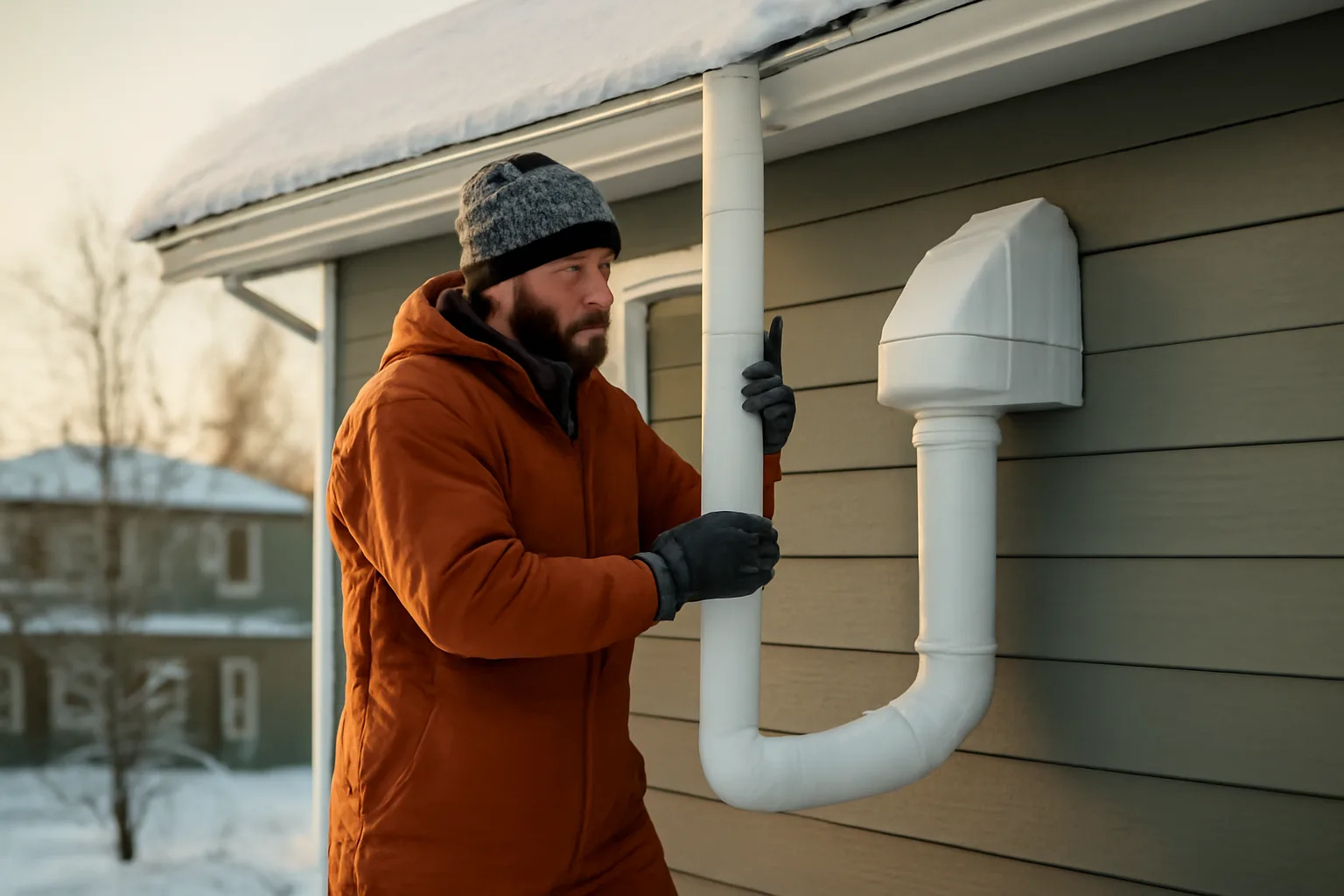
Alaska's weather and distance rarely stretch the install itself. Most of the work happens inside the house or garage, where the piping and fan get mounted, and the only outdoor piece is the exhaust pipe. Larger homes or jobs with heavy slab or crawlspace work can eat an extra day. For a standard ranch or split-level, expect the crew done between 8 a.m. and 4 p.m.
Does Alaska require a radon measurement technician license?
No. The same rule covers measurement: Alaska has no state license for radon measurement technicians. [1] You can legally test homes without any credential. Clients, real estate agents, and lenders still want a report from a nationally certified measurement professional.
The Alaska Radon Program's voluntary list includes measurement people who hold NRPP or NRSB measurement certification. [1] If you only plan to test, the NRPP measurement path is shorter: an 8-hour course plus an exam. Plenty of small operators carry both measurement and mitigation certifications so they can offer the whole job under one roof.
Do you need a business license for radon work in Alaska?
Yes. Every business operating in Alaska needs a state business license, from a solo mitigator to an LLC with a crew. The Alaska Business License Act (AS 43.70.020) requires "a person to obtain a business license before engaging in business in the state." [5]
The license costs $50 per year, renewed on a two-year cycle, and you apply online through the Department of Commerce, Community, and Economic Development. [4] No radon-specific endorsement exists. The basic Business License covers your mitigation work. Operate under a name other than your legal name and you also register a business name (DBA) for $25. Check your city too: Anchorage and Fairbanks can require separate municipal licenses.
Radon levels in Alaska: are you at high risk?
Yes. The entire state sits in EPA Zone 1, the highest category for indoor radon potential. [6] Zone 1 means the predicted average indoor level is greater than 4 pCi/L. Alaska's uranium-rich granites and permafrost dynamics that trap soil gas both push radon up.
The Alaska Radon Program found that roughly one in three tested homes came back above the EPA action level of 4 pCi/L. [9] Fairbanks and the Mat-Su Valley run especially high, but no borough is safe. That steady risk is why mitigation pros stay busy even with no licensing mandate on the books.
How to find a qualified mitigator in Alaska
Start with the Alaska Radon Program's online list of certified professionals. [1] Everyone on it holds a current NRPP or NRSB credential. You can also search the NRPP national directory at nrpp.info/find-a-professional and filter by state.
Homeowners, ask for proof of certification and liability insurance before work starts. Alaska is a voluntary state, so uncredentialed contractors can and do bid. Screen them yourself. For a real estate deal, the lender or buyer will almost always demand certified testing and mitigation, so hiring outside the list can stall your closing.
Fast-track your NRPP certification with a structured kit
Ready to stop researching and start? You can skip weeks of piecemeal studying. RadonPath's NRPP Mitigation Kit ($149) includes an online course that meets NRPP's 16-hour training requirement, practice exams built to mirror the real cert test, and a step-by-step application tracker so your paperwork lands right the first time. [See radonpath.com/start.]
It is not a stand-in for hands-on experience. It packages the required classroom portion so you can move fast. New entrants in Alaska often use it to prep while they line up a first field mentorship or practice on their own property. The NRPP exam is proctored online, so you can test from anywhere, even a remote cabin.
What should you do next?
Run these steps in order. 1) Register your business with the State of Alaska and get the $50 business license. 2) Enroll in an NRPP-approved mitigation course. Many Alaskans use RadonPath's kit because it's self-paced and covers the study materials. 3) Pass the NRPP exam. 4) Apply for the state voluntary listing if you want the extra visibility. 5) Buy liability insurance and equipment.
Once you certify, you land steady work in a state where radon awareness is high and qualified pros are thin. The paper path takes about six to eight weeks from your first course login to a certificate in hand. For the full startup guide, see how to start radon mitigation in Alaska.
Frequently asked questions
Do you need a license for radon mitigation in Alaska?
No. The Alaska Department of Environmental Conservation does not issue a radon mitigation license. You can legally perform mitigation without a state credential, but clients and real estate professionals expect NRPP or NRSB national certification. The state runs a voluntary listing of certified professionals, and it is not a license.
How much does radon mitigation cost in Alaska?
The EPA national average is about $1,200, with a range of $800 to $2,500. In Alaska, costs typically run $1,500 to $3,500 because of higher materials shipping and crawlspace complexities. Get at least three written estimates from certified contractors before you commit.
How long does radon mitigation take in Alaska?
A standard single-family install usually takes one day, about 4 to 8 hours. The EPA notes systems can be completed in a few hours to a few days, depending on size and complexity. Alaska weather generally does not extend the indoor work.
Is radon mitigation required by law in Alaska?
No. No state law requires homeowners to mitigate radon, and there is no requirement for radon testing during real estate transactions. The high share of homes over the EPA action level still makes mitigation a common voluntary step, especially before a sale.
Can I do my own radon mitigation in Alaska?
Legally, yes, because there is no licensing requirement. DIY mitigation is risky though. Wrong fan sizing, sloppy piping, or bad sealing can make radon levels worse instead of better. Most homeowners hire a certified professional and confirm the result with a post-mitigation test.
What certification is best for Alaska mitigation contractors?
NRPP (National Radon Proficiency Program) is the most common. The state's voluntary list accepts it, and lenders, insurers, and home inspectors recognize it. NRSB is a valid alternative, but NRPP carries broader market acceptance in Alaska.
Does Alaska offer reciprocity with other states for radon certification?
No. Alaska issues no state-specific radon certification, so there is nothing to reciprocate. Your NRPP or NRSB certification is valid nationwide, and the state's voluntary list just asks you to submit proof of that national credential.
How do I become NRPP certified in Alaska?
Complete a 16-hour NRPP-approved mitigation course (online or through the University of Alaska Fairbanks Extension), pass the proctored exam ($165 fee), submit an application, and pay the initial two-year certification fee ($165). Continuing education of 16 hours every two years keeps it active.
Are there radon mitigation grants or financial assistance in Alaska?
No state-funded aid targets radon mitigation right now. Some federal weatherization assistance programs may include radon testing or limited mitigation funds for low-income households. Check with the Alaska Housing Finance Corporation about potential home improvement loans.
How many radon mitigation professionals are in Alaska?
The Alaska Radon Program's voluntary list typically shows between 10 and 15 active mitigation providers. The number moves around. Search the state's online directory or the NRPP find-a-professional page for a current count.
What are radon levels like in Anchorage, Fairbanks, and Juneau?
All three sit in EPA Zone 1. Fairbanks and the Mat-Su Valley post some of the highest measured levels, often above 10 pCi/L. Anchorage runs mixed, with many homes over 4 pCi/L. Juneau has fewer data points but reports elevated levels in some neighborhoods.
How do I renew my NRPP certification while working in Alaska?
Every two years you submit 16 hours of continuing education, a renewal application, and a fee (currently $165). Earn CE through online courses, conferences, or manufacturer training. Keep your records, because NRPP audits at random.
Sources
- Alaska Department of Environmental Conservation, Radon Professionals: Alaska does not license radon professionals; voluntary list requires NRPP or NRSB certification.
- EPA, A Citizen's Guide to Radon (2016): National average mitigation cost $1,200; typical range $800 to $2,500.
- EPA, Consumer's Guide to Radon Reduction (2016): Installation can take a few hours to a few days.
- Alaska Department of Commerce, Community, and Economic Development, Business Licensing: All Alaska businesses must have a license; fee $50.
- Alaska Statutes 43.70.020: Legal requirement to obtain a business license before engaging in business.
- EPA, Radon: All Alaska boroughs and census areas are classified as Zone 1 (highest radon potential).
- EPA, Radon Professional Certification: Mitigation certification requires an approved course, exam, and application.
- CDC, Radon: NRPP mitigation exam fee $165; initial two-year certification $165 (2024 pricing).
- Alaska Radon Program, Radon in Alaska: About one-third of tested Alaska homes exceed the EPA action level of 4 pCi/L.
- University of Alaska Fairbanks Cooperative Extension Service, Radon Program: Offers periodic radon measurement and mitigation training courses.