Last updated 2026-08-20
TL;DR
Radon mitigation lowers indoor radon, usually with a fan and pipe that pull soil gas from under a slab or crawl space and vent it above the roof. EPA's fix point is 4 pCi/L. To start the work you confirm state license rules, get the credential your board names, follow ANSI/AARST practice, and pull local permits. Confirm fees with that board.
What is radon mitigation?
Radon mitigation is the set of building changes that lower radon in indoor air. In existing homes that almost always means a continuous fan, sealed pipe, and a roof discharge that pull soil gas away from the living space. It is a mechanical system. Not a filter jug.
Radon is a colorless radioactive gas from the decay of uranium in soil and rock. It moves with soil gas. Houses pull on that soil because indoor air is often a bit negative relative to the ground. The gas comes through slab cracks, control joints, sumps, hollow block, and dirt crawl spaces. EPA's health page states, "Radon is responsible for about 21,000 lung cancer deaths every year." [1] NCI and CDC publish the same core hazard in public health language. [5][6]
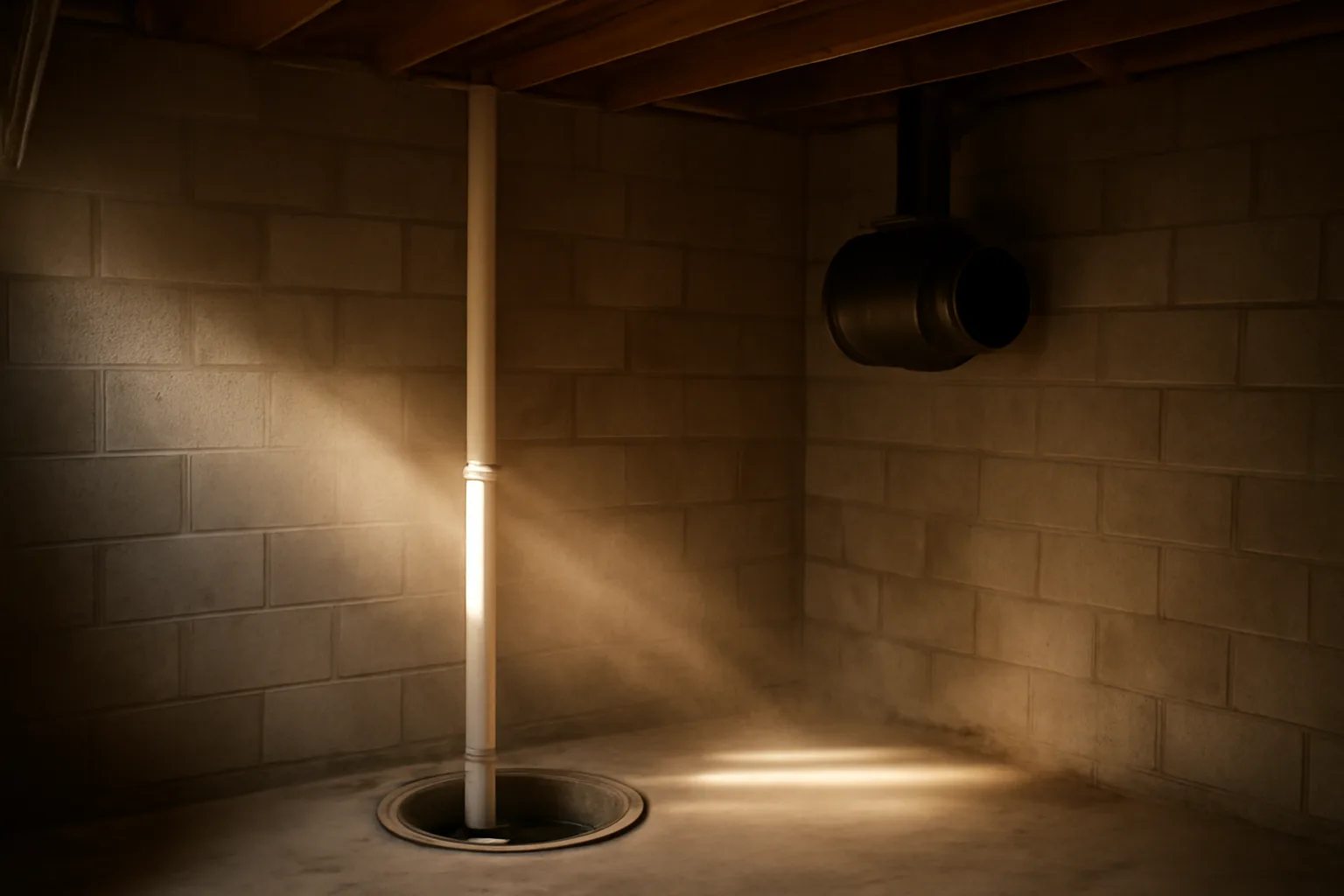
The usual existing-home system is active soil depressurization. You open a suction point through the slab, or you seal a crawl membrane and take suction from under it. A radon-rated fan runs all day. Pipe carries the gas to a discharge above the roof and away from openings. Sealing big holes helps the fan. Sealing alone rarely fixes a high house.
I would treat whole-house ventilators as a second tool, not the default. They can dilute radon in some tight buildings. They also cost energy and they fail when people close the intakes. Soil suction is what I would sell first on a normal slab ranch.
Mitigation is not testing. Testing uses listed devices and a measurement credential. Several states restrict the same person from testing and then selling the fix on the same address. Read that rule before you print two services on one card.
How do you start radon mitigation?
You start with the paper path. Confirm whether your state licenses or certifies radon mitigators, earn the credential that board names, set up a legal business, buy insurance a contract will actually require, then bid. Cutting a slab first is how people get fined.
EPA does not hand out a national contractor license. EPA points the public to state radon programs and to proficiency lists. [10] Illinois requires licensing under the Radon Industry Licensing Act. [8] Florida puts radon program and certification language in section 404.056, Florida Statutes. [7] Iowa addresses radon in Iowa Code chapter 136B. [11] New Jersey runs a certification list. [13] Ohio runs a radon licensing program. [14] Other states run nothing beyond a general business license. Confirm your state. Do not copy a crew two states over.
Here is the order I would follow. Read the state radon program page and write down the exact credential name. If they name an NRPP mitigation specialist card or an NRSB mitigation card, take an approved course and sit that exam. Course calendars and application windows change. Confirm them with the body that grades the test. Form the business entity your state already uses for trades. Get general liability at limits a builder or a listing attorney will accept. Learn the ANSI/AARST soil gas mitigation standard, because that is what a later inspector will hold you to. [9][12]
Local permits still exist. A roof penetration and a new electrical circuit are building and electrical work even when the radon office is quiet. I would pull the permit. Skipping it to save a week is a good way to fail a resale inspection.
If you are still comparing system types before you enroll, start with radon mitigation guide 11 and radon mitigation guide 17.
What radon number means a house needs mitigation?
EPA recommends fixing a home at 4 pCi/L or higher. The Citizen's Guide is blunt: "Fix your home if your radon level is 4 picocuries per liter (pCi/L) or higher." [2] WHO uses a national reference level of 100 Bq/m3, about 2.7 pCi/L. [4] Between 2 and 4 pCi/L, EPA still says consider a fix.
4 pCi/L is a policy threshold, not a magic safe line. Risk rises with concentration and with time spent in the building. NCI's fact sheet walks through the lung cancer evidence and the smoker split. [5] CDC repeats the same hazard for households. [6] WHO estimates radon causes 3% to 14% of lung cancers in a country, depending on the average level and on smoking. [4]
Short-term tests run 2 to 7 days. Long-term tests run 90 days or more. I would not design a system off one windy 48-hour charcoal canister if I can help it. Two short-term tests, or one long-term test, is the Citizen's Guide pattern. [2]
Post-mitigation, you retest the air. A pretty manometer is not a radon result. If you cannot get a house under 4 pCi/L, you diagnose. You do not argue with the client about the EPA number.
| Threshold or cost | Figure | Source |
|---|---|---|
| EPA home fix point | 4 pCi/L | EPA Citizen's Guide, 2016 |
| WHO reference level | 100 Bq/m3 (about 2.7 pCi/L) | WHO radon fact sheet |
| Typical system cost band | about $800 to $2,500 | EPA Consumer's Guide, 2016 |
For how different system types compare once you have a number, radon mitigation guide 23 is the next read.
How does a mitigation system actually work?
A typical active soil depressurization system makes the soil under the house slightly lower in pressure than the indoor air, so soil gas flows to the fan instead of into the room. The fan runs all the time. You verify suction, then you retest the air.
On a slab you cut a suction pit, drop PVC into that pit, seal the slab penetration, and run the pipe to a radon-rated fan. Discharge is above the roof and away from windows and other openings. AARST soil gas practice is where the current clearance distances live. Read the edition you will be judged on. [12] Crawl houses get a sealed membrane with taped and sealed penetrations, then suction from under that sheet.
Some houses need drain-tile suction or block-wall suction. Those are still the same idea. Make the soil side a little negative. EPA's Consumer's Guide still names soil suction as the common reduction method. [3]
Sealing is support work. Caulk alone does not mitigate a 12 pCi/L slab house. I would still close the big holes because they waste fan capacity. I would not sell "seal and hope" as the system.
Combustion appliances need a look before you pull hard on the soil. A new fan can backdraft a water heater if the house is already tight. Check it. That is not optional in my book.
Pipe size and fan choice follow static pressure, not a Facebook rule of one fan fits all. If you do not own a micromanometer yet, you are guessing.
Do you need a license to mitigate radon?
Sometimes yes, sometimes no. It depends on the state, and in a few places on the county. There is no EPA contractor card. Check the state radon program before you print a truck decal. [10]
Illinois requires a license under 420 ILCS 44. [8] Florida's radon program language sits in section 404.056. [7] Iowa puts radon duties in chapter 136B. [11] New Jersey certifies mitigators on a state list. [13] Ohio licenses radon work through the health department. [14] If your state is silent, you can still be sued for a bad install, and home inspectors still look for AARST-shaped work.
Never treat a blog fee table as current. Application prices move. Confirm the present amount with the board that will print your card. Same for quotas, if any, and for how long a file sits on a desk. Nobody honest can promise you a turnaround.
Working across a state line without that state's card is how people get fined. I would not do it for a Saturday side job. Reciprocity, if it exists, is a board question, not a handshake.
A city business license and a radon credential are different papers. You may need both. You may also need an electrical permit even when the radon office never sees the job.
What paper should you have before the first install?
Before you cut a slab you want the state credential if required, the local permit if required, a written contract, a simple diagram of planned suction points, proof of insurance, and a plan for the post-mitigation test. That stack is the job. The saw is the easy part.
If you also measure, use devices listed by the proficiency body your state names. Mitigation fans should be rated for radon duty. Kitchen bath fans are a waste and they die. Keep the fan spec sheet in the job file.
Contracts should say what you will install, what you will not open (finish floors, hidden asbestos, a live panel you are not licensed to touch), and how retest will be handled. Several states want a notice or a system label. Confirm the current form with that program. [10]
RadonPath publishes a $149 one-time NRPP Mitigation Kit if you want the forms in one pile. The boards will also give you the same applications for free.
I would photograph the slab, the sump, the discharge path, and the electrical point before you drill. Memory is a poor exhibit if a buyer complains six months later.
Do not start a house that already has an active real estate fight unless the contract names who pays if the first system does not hit 4 pCi/L. That fight is not your hobby.
How much does a radon mitigation job usually cost?
EPA's 2016 Consumer's Guide said the average system was about $1,200, with a common range of about $800 to $2,500. [3] That figure is old. Labor, PVC, and fan prices moved. Treat it as a documented baseline, not a current bid sheet. Nobody has a clean national average after that guide. The closest official U.S. band is still that EPA page.
Price moves with access. A clean basement slab with an exterior fan run is one job. A finished lower level, a crawl plus a slab, a long interior chase, or a panel that needs a new circuit is another. Decorative ceilings eat hours.
I would bid the electrical honestly. A lot of cheap ads assume a plugged-in fan in a garage. Inspectors hate a trip-hazard cord and an unmarked switch.
Homeowner DIY can undercut a crew on a simple ranch. It can also miss discharge rules and leave a house at 6 pCi/L. If you are bidding against DIY, sell the diagnostic and the retest path, not a poetry recitation about cancer.
For cost-shaped comparisons, see radon mitigation guide 29 and radon mitigation guide 35.
What training and exams do new mitigators take?
Most licensed states want an approved mitigation course plus a proficiency exam from NRPP or NRSB, then their own application. Course length is set by the provider and by the board, not by a blog. Confirm the current outline with the body that will accept the certificate. [10][13][14]
Measurement and mitigation are different classes. Sit the right exam. A measurement card does not let you cut slabs in a license state. A mitigation card does not automatically make you the listing inspector.
I would take the course that the board names on its application, even if a cheaper weekend class looks similar. Rejected coursework is a real delay. Confirm the provider ID before you pay.
Continuing education is recurring. Miss it and the card lapses. Put the renewal date on a paper calendar. Apps get ignored.
Exam windows, retake rules, and fees change. I will not invent them here. Ask the proficiency body and the state program. If someone quotes you a guaranteed pass date, walk.
Which standards apply on a real job?
EPA points practitioners to the ANSI/AARST consensus standards as the current standards of practice. [9] For existing homes the soil gas mitigation document is SGM-SF. [12] Building codes, electrical codes, and the fan maker's instructions still apply. A radon card does not waive the electrical code.
If a client asks you to "just put a cheap fan in the sump," that is how you buy a callback. Follow the standard or walk. Sump lids, sealed penetrations, and a readable U-tube or gauge are not decoration. They are how the next inspector decides you did real work.
Discharge location, fan rating, labeling, and documentation live in the standard you cited in the contract. Read that edition. Do not work from a 12-year-old photocopied packet.
New construction has a separate radon-resistant path. That is not the same as retrofitting a 1978 ranch. Do not mix the details.
When you want a side-by-side of practice choices, radon mitigation guide 47 is built for that comparison.
What first-year equipment is worth buying?
A micromanometer, a good SDS drill, a core bit you will hate paying for, PVC cement that matches the pipe, a combustion-appliance check plan, and a U-tube or magnehelic the homeowner can read from living space. That is the kit I would actually put on a truck.
Buy radon-rated fans, not bath fans. Keep one spare of the model you actually install, not five catalog orphans. Pipe is cheap next to a second trip.
A $2,000 thermal camera is a toy in year one unless you already know how to use it. Same for a full crawler camera set. Rent until the work pays for the tool.
Safety gear is not optional. Silica dust from slab cuts is real. Wet-cut or vac. I would not skip that to look faster on a Saturday.
Skip the wrapped lease van until you have repeat work. A clean unmarked van and a printed contract beat a decal and no license.
What is a waste of money when you start?
National franchise fees for a trade this small are often a waste. So is buying every fan model in the catalog. So is running ads in a state where you are not yet licensed. Get legal, get three clean jobs, then spend on marketing.
Ion boxes and "radon paint" as a primary fix are a waste on a typical slab house. They do not replace soil suction. EPA's consumer materials still center soil suction systems for existing homes. [3]
I would not buy a second set of test devices until I knew whether my state even lets the mitigator run the official post-test. That purchase can sit in a drawer.
Cheap unlisted charcoal from a hardware endcap is a waste if you need a number a buyer will accept. Use a listed device or hire a listed tester.
If you want more comparison reading before you spend, use radon mitigation guide 53.
How do you close a job after the fan is on?
You confirm the system is drawing, you leave the homeowner a plain operation sheet, you schedule a post-mitigation radon test with a qualified measurement person (which may not be you), and you keep the diagram. The job is not closed because the fan hums.
EPA's consumer materials expect a retest after mitigation. [3] I would retest no sooner than the standard allows, after the house is back to normal occupancy. Closed windows. Normal heat. Not a 20-minute walkthrough with a sniffer you wave near the pipe.
If the number is still high, you add suction or seal the big leaks. You do not argue. You also do not vanish. Callbacks are part of the trade.
Tell the owner the fan must stay on. A system that is unplugged is not a system. Show them the gauge. Show them the discharge. Write the fan model on the label.
RadonPath is an independent publisher, not a law firm and not a mitigation company. If you want the kit path, go to /start. For a license answer, call the board.
Frequently asked questions
What is radon mitigation?
Radon mitigation is work that lowers radon in indoor air. In existing houses that usually means active soil depressurization: a sealed pipe, a continuous radon-rated fan, and a discharge above the roof. Sealing cracks helps the fan. It is not, by itself, the system. Retest the air after the fan runs.
How do you start radon mitigation?
Start on paper. Read your state radon program, see if a license or certification is required, and earn the credential that board names (often NRPP or NRSB mitigation). Form a legal business, buy liability insurance, learn ANSI/AARST SGM-SF practice, and pull local permits. Confirm fees and file windows with the board. Do not invent a start date.
Is radon mitigation the same as radon testing?
No. Testing measures radon with listed devices. Mitigation changes the building so the number falls. They are different credentials in most proficiency programs and in license states. Some states limit the same person from testing a house and then selling the fix. Read the dual-role rule before you advertise both.
Can I install my own radon mitigation system?
Some states allow homeowner DIY on your own house. License states may still restrict who may take money to install for others. DIY misses discharge rules and electrical work more often than crews admit. If you DIY, follow current AARST practice and retest. A humming fan is not proof the air is under 4 pCi/L.
What is the EPA action level for radon?
EPA recommends fixing a home at 4 pCi/L or higher. The 2016 Citizen's Guide says to fix at that number after one long-term test or the average of two short-term tests. EPA also says consider a fix between 2 and 4 pCi/L. WHO's reference level is 100 Bq/m3, about 2.7 pCi/L.
Do I need a permit for radon mitigation?
Often yes, even when the state radon office is silent. A roof penetration and a new circuit are local building and electrical work. Some cities want to see the radon credential with the permit. Ask the building department that covers the address. Skipping the permit is a common way to fail a later resale inspection.
What is NRPP certification?
NRPP is the National Radon Proficiency Program. Many states accept an NRPP mitigation specialist credential as part of their license file, or they treat it as the credential when they have no separate card. It is not a national license by itself. Confirm whether your board wants NRPP, NRSB, its own exam, or some mix.
How long does a mitigation system last?
The PVC and the suction pit last with the house if they were installed dry and sealed. Fans are wear items. Makers often talk in terms of a several-year expected run, then replacement. Nobody should promise a lifetime fan. Budget a replacement fan and a retest when the old one dies or the gauge falls.
Does a mitigation system raise the electric bill?
Yes, because the fan runs all the time. The add is usually modest next to whole-house cooling, but it is not zero. Wattage depends on the fan model and the static pressure it works against. An oversized fan wastes power and can pull too hard. Pick the fan from measured pressure, not from a sales photo.
How soon can I retest after mitigation?
After the system has run and the house is back to normal closed-house conditions. Follow the measurement protocol your state or the proficiency body names, not a 20-minute walkthrough. EPA consumer materials expect a post-mitigation test. If you are the installer, check whether you are even allowed to run that official test.
Is crawl space mitigation different from basement mitigation?
The physics is the same. You want the soil side slightly negative. The build is different. Crawls need a sealed membrane with sealed penetrations and suction under that sheet. Basements more often use a slab suction pit. Mixed houses (crawl plus slab) often need both. That mix is where cheap one-pipe bids fail.
Do I need both NRPP and a state license?
If your state licenses mitigators, you need whatever that statute and the board application name. That may be the state card plus an NRPP or NRSB exam, or a state exam alone. If your state has no radon card, NRPP still helps with inspections and with insurers. Confirm the current pairing with the board. Do not assume reciprocity.
Sources
- U.S. EPA, Health Risk of Radon: EPA attributes about 21,000 U.S. lung cancer deaths each year to radon and calls radon the second leading cause of lung cancer.
- U.S. EPA, A Citizen's Guide to Radon (2016): EPA recommends fixing a home at 4 pCi/L or higher after one long-term test or the average of two short-term tests.
- U.S. EPA, Consumer's Guide to Radon Reduction (2016): EPA described soil suction as the common reduction method and put typical system cost at about $1,200, commonly about $800 to $2,500.
- World Health Organization, Radon and health fact sheet: WHO recommends a national reference level of 100 Bq/m3 and estimates radon causes 3% to 14% of lung cancers in a country.
- National Cancer Institute, Radon and Cancer fact sheet: NCI summarizes the lung cancer risk from indoor radon, including higher risk among smokers.
- CDC, About Radon: CDC describes radon as a naturally occurring radioactive gas that can collect indoors and raise lung cancer risk.
- Florida Statutes s. 404.056 (2023): Florida statute 404.056 sets environmental radiation and radon program rules, including certification and disclosure language used in the state.
- U.S. EPA, Radon Standards of Practice: EPA points practitioners to ANSI/AARST consensus standards as the current radon standards of practice.
- Iowa Code chapter 136B, Radon Testing and Notification: Iowa Code chapter 136B is the state's radon testing and notification statute that frames professional radon duties.
- ANSI/AARST SGM-SF Soil Gas Mitigation Standards for Existing Homes: SGM-SF is the consensus standard for soil gas mitigation in existing homes, including system design, labeling, and documentation.