Last updated 2026-08-19
TL;DR
Radon mitigation lowers indoor radon, usually with a fan-driven soil suction system. EPA recommends a fix at 4 pCi/L or higher. Typical U.S. systems cost about $800 to $2,500. There is no national license. Start by checking your state, take an approved course, then sit an NRPP or NRSB exam. Confirm every fee and form with the board that regulates you.
What is radon mitigation?
Radon mitigation is the work of lowering radon gas inside a building so people breathe less of it. In a house that usually means a sealed pipe, a fan that runs all the time, and a roof discharge that pulls soil gas from under the slab or from a crawl space. It is not a furnace filter. It is not a one-time spray.
EPA describes the source in plain language. "Radon is a radioactive gas. It comes from the natural decay of uranium that is found in nearly all soils." That sentence is from the EPA Citizen's Guide to Radon [1]. The gas moves through soil and into the house through cracks, sumps, and other openings. Mitigation cuts off that path.
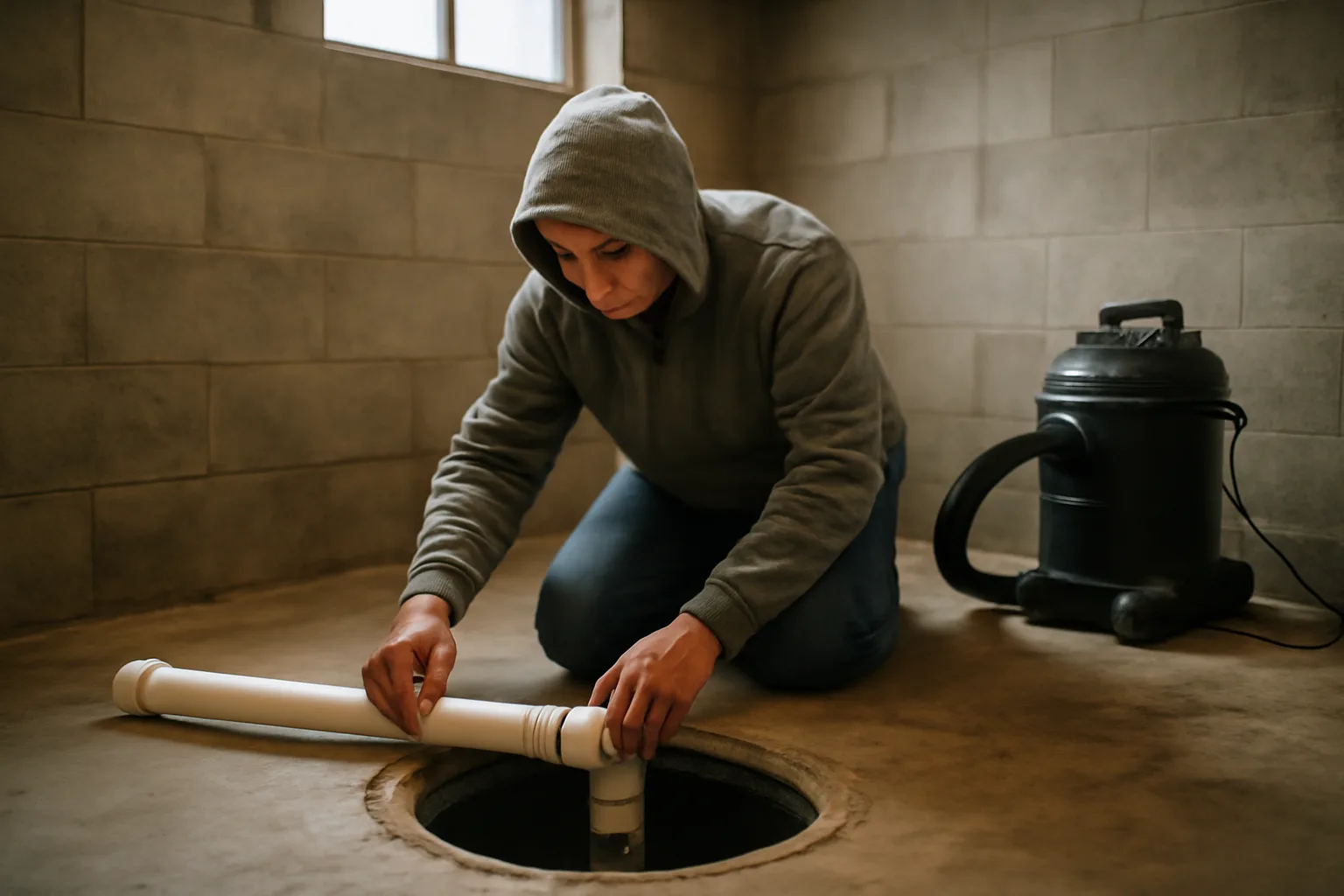
Most residential jobs use active soil depressurization. You create a suction point under the slab (or under a crawl-space membrane), run PVC to a fan, and exhaust above the roof. Other designs exist. Drain-tile suction. Block-wall suction. Sub-membrane depressurization. House ventilation sometimes trims a little off a moderately high reading in a tight building, but it is not the first tool most practitioners reach for when a test comes back high.
The point of the work is health, not comfort. EPA estimates about 21,000 U.S. lung cancer deaths each year from radon [3]. The National Cancer Institute says radon is the second leading cause of lung cancer in the United States [9]. WHO calls radon the most important cause of lung cancer after smoking [4]. Mitigation does not take radon to zero. It aims for a stable, much lower indoor level that you then retest.
If you are entering the trade, learn the building first. A pretty pipe run that does not move the number is a failed job. A rough pipe run that holds about 1.2 pCi/L after a valid retest is a good one.
How much does radon mitigation usually cost?
EPA's Consumer's Guide to Radon Reduction puts a typical single-family radon reduction system between $800 and $2,500, with an average near $1,200 [2]. That is the consumer-facing federal range. It is not your bid sheet, and it is not current contractor overhead in a tight labor market.
Those dollars buy diagnostics, a suction point, pipe, a fan, electrical, sealing, labeling, and a post-mitigation test. Big houses, poor slab communication, crawl spaces that need a full membrane, and long exterior runs push the high end. Simple basements with good aggregate under the slab sit near the low end.
If you are the new contractor, do not price off that $1,200 average and hope. Your first-year cost is the labor time you still waste, a truck, insurance, permit fees that change by city, and the rework you eat when a system underperforms. I would bid fewer jobs with a real diagnostic hour built in rather than chase the cheapest online lead.
A waste of money on the consumer side is paying for decorative covers before the number is down. A waste on the trade side is buying a trailer full of premium fans before you have installed and retested ten systems yourself. Confirm any permit fee with the local building department. Nobody publishes one honest national permit number, because cities do not use one.
How do you start radon mitigation?
You start radon mitigation in two different ways, and mixing them up is how people get fined. A homeowner starts by testing the house, reading the number, then hiring a qualified contractor or, in some states, installing on their own home. A person entering the trade starts with the paper path: state rules, an approved course, an exam, then whatever license or listing that state actually requires.
There is no federal radon mitigation license. EPA publishes health guidance and consumer documents [1][11]. States decide who may charge for the work. Illinois licenses the industry under the Radon Industry Licensing Act [6]. Florida runs a statutory radon program that includes professional certification and a required real-estate disclosure [5]. Iowa lists certified radon professionals through its health department [14]. Minnesota publishes consumer rules for hiring mitigators and for testing after the work [10]. Other states require little or nothing. You cannot guess which group you are in.
Here is the order I would actually follow. Find the state radon program page and read whether mitigation for hire is regulated. Pick a measurement path and a mitigation path if the state wants both. Take only a course your state and your chosen proficiency program both accept. Sit the NRPP or NRSB exam the board names [7][13]. File the state form if one exists. Get general liability (and whatever else the board or your customers will ask for) before you print a yard sign.
Do not advertise "EPA certified." EPA does not certify contractors. That phrase is a classic first-year unforced error.
If you want a single place that organizes the national proficiency paperwork, RadonPath publishes a $149 one-time NRPP Mitigation Kit at /start. It does not replace your state board, and it does not speed a license.
Then learn buildings. Ride along if you can. Your first paid system should be a simple basement, not a split-level with four additions.
What radon level means you should mitigate?
EPA recommends fixing a home when one long-term test, or the average of two short-term tests, reads 4 pCi/L or higher [1][11]. EPA also says to consider a fix between 2 and 4 pCi/L [11]. That 4 pCi/L line is the number you will hear in almost every U.S. real-estate deal.
The federal wording is direct. "EPA recommends fixing your home if the results of one long-term test or the average of two short-term tests show radon levels of 4 pCi/L or higher." That line is from EPA's citizen guidance [1][11].
WHO uses a different unit and a lower reference. The WHO radon fact sheet sets a national reference level of 100 Bq/m3 [4]. That converts to about 2.7 pCi/L. WHO also estimates radon causes between 3% and 14% of lung cancers, depending on the country and the smoking rate [4]. WHO says radon is the most important cause of lung cancer after smoking [4].
A new mitigator should not promise "under 2" in the contract if the house may not get there. Promise a professional system, a valid post-test, and more work if the number stays at or above 4 pCi/L. That is the honest consumer standard EPA already wrote [2][11].
Zone maps do not decide a house. EPA's Map of Radon Zones ranks counties by potential [15]. Plenty of Zone 3 houses test high. Test the building. Mitigate the building.
Do you need a license to do radon mitigation?
Sometimes. The United States does not issue a national radon license. Whether you need one depends on the state where the house sits, and sometimes on the city.
Illinois requires a license for radon mitigation professionals under 420 ILCS 44 [6]. Florida's section 404.056 sets out radon requirements and a certification structure for people who perform the work [5]. Iowa certifies measurement and mitigation professionals and publishes the list [14]. Minnesota expects consumers to use listed professionals and to retest [10]. Many states still have no mitigator license at all. In those states, a national NRPP or NRSB credential is still useful for real-estate work and for insurance, but it is not a state card.
Homeowners often may mitigate their own occupied house even in licensed states. That exception is not a green light to do the neighbor's house for cash. Read the statute. If the statute is silent, ask the radon program in writing.
Local building and electrical permits are a separate layer. A state with no radon license can still fail your inspection for an unpermitted fan circuit. Confirm both.
Renewal rules differ by state once you hold a credential. See radon mitigation renewal in Florida, radon mitigation renewal in California, radon mitigation renewal in Colorado, and radon mitigation renewal in Arizona.
What training and exams do new mitigators actually take?
Most people entering the trade take an approved classroom or online mitigation course, then sit a third-party exam from NRPP or NRSB [7][13]. Some states also want a measurement credential before they let you mitigate, because you cannot close a job you cannot test.
NRPP's new-applicant pages describe a path of required approved training plus examinations, then an application to the program [7]. NRSB runs a parallel private certification path [13]. Kansas State University's National Radon Program Services is a long-running training and public-information shop that many new people use to find courses and consumer material [8]. Course hours and prerequisites change. I will not quote an hour count here, because boards edit those tables. Read the current catalog and match it to your state list.
A waste of money is the cheapest weekend course that your state later rejects. Another waste is paying for a business class before you have passed the exam. Pass the exam. Then buy the pipe.
If your state has no list of accepted courses, ask the state radon contact which national exam they recognize in practice, even if they do not license anyone. Real-estate attorneys and home inspectors in that state already have a habit. Fit the habit or be ready to explain yourself on every deal.
Confirm current exam fees, application fees, and retake rules on the NRPP or NRSB site. Those numbers move. I will not invent them.
What does a first mitigation job look like on paper?
A first job is a stack of paper that happens to include a fan. You want a written scope, a floor sketch, notes from a communication test, the permit if the city wants one, photos of the suction point and the discharge, a system label, and a post-mitigation test report.
EPA's consumer guide is still the document homeowners read when they argue with you about what "done" means [2]. Minnesota's mitigation page is a clean example of state consumer expectations: hire someone on the list, then test again [10]. During a sale, buyers will show up with EPA's Home Buyer's and Seller's Guide [12]. If your paperwork cannot survive that packet, it is not finished.
Keep a simple job jacket. Address. Pre-test device and result. Diagnostic notes. Fan model and serial. Manometer reading at handover. Post-test device and result. Permit number. That file saves you when a realtor calls in eight months.
Skip the communication test and you will drill the wrong spot. That is the expensive lesson. Skip verbal-only change orders too. If you add a crawl-space membrane after you open the hatch, write it down before you staple.
The customer should leave with two things besides a running fan: a one-sentence explanation of the manometer, and a date to retest. If you cannot say both out loud, the job is not closed.
What equipment and standards do you follow on day one?
Day-one gear is boring on purpose. A drill that can open a slab. PVC and fittings. A listed radon fan. A U-tube manometer. Sealant that actually sticks to dusty concrete. A properly terminated discharge. A lockable disconnect if the electrical code in that city wants one.
The design standard most serious U.S. practitioners now point to is the AARST/ANSI soil-gas mitigation standard for existing homes (SGM-SF), not the old 1990s EPA mitigation-standards PDF. EPA still publishes consumer-level system descriptions [2]. Follow the current consensus standard your state names. If the state names nothing, SGM-SF is the document I would build to anyway, because it is what a later inspector or lawsuit will cite.
Do not use a bath fan. Do not dump the exhaust three feet off the ground next to a window. Do not hide the manometer in a closet the homeowner will never open. Label the system so the next person can tell what they are looking at.
Electrical work is where new mitigators get in trouble. If you are not a licensed electrician and the city requires one, hire one. That is not optional pride. That is how you keep the permit.
Buy one fan family you understand and stock two sizes. Mixing five brands in month one is how you forget which capacitor you need on a Saturday callback.
How do state rules differ from national certification?
National certification is a private proficiency card. State licensure is a government permission slip. They are not the same thing, even when the state uses the national exam as its test.
| Check | NRPP or NRSB card | State license or certification |
|---|---|---|
| Who issues it | Private proficiency programs [7][13] | A state statute or health department [5][6][14] |
| Required in every state? | No | Only where a law says so |
| Typical entry | Approved course plus exam | Often the same exam, plus a state application |
| Typical renewal | Program CE and a program fee | State CE, a state fee, or both |
| Confirm on | nrpp.info or nrsb.org | Your state radon program |
Florida writes radon duties into statute, including the disclosure that begins, "Radon is a naturally occurring radioactive gas that, when it has accumulated in a building in sufficient quantities, may present health risks to persons who are exposed to it over time." That sentence is in section 404.056 [5]. Illinois wrote a full licensing act [6]. Iowa runs a professional certification list [14]. California has a long public radon program history without the statewide mitigator license model you see in Illinois. Always read the current board page. Statutes get amended.
If you work across state lines, reciprocity is not automatic. Check both boards before you drive. More state paper after the first card lives in guides like radon mitigation renewal in Connecticut, radon mitigation renewal in Georgia, radon mitigation renewal in Delaware, and radon mitigation renewal in Idaho.
What first-year mistakes waste money?
The expensive mistakes are paperwork and pride, not PVC.
Paying for a national card and then advertising in a licensed state without the state license. Buying every fan model so you feel ready. Skipping measurement training in a state that will not let a mitigator close a job. Printing "EPA approved" on a truck. Bidding crawl-space membranes like they are a simple basement core drill. Ignoring electrical permits. Taking a real-estate rush job at 6 p.m. Friday with no pre-test you trust.
Spend first-year cash on a decent hammer drill, a small set of fans you already understand, liability insurance, and retakes of your own post-tests. Do not spend it on a wrap for the van or software you will not open.
Nobody has clean public data on first-year mitigator failure rates. The closest honest signal is the complaint patterns on state radon program pages and the fact that EPA still has to tell people to retest after mitigation [2][10]. If you cannot explain that retest in one sentence, you are not ready to sell.
Another quiet money pit is unused inventory. Pipe is cheap until it fills the garage. Order for the next two jobs, not the next two years.
How do you keep a mitigation credential after year one?
You keep it by renewing on the cycle your program and your state actually use. That usually means continuing education, a renewal form, and a fee you confirm at the time you file. I will not quote a CE hour number or a renewal fee, because both change and neither is national.
If you also measure, device listing and calibration windows matter as much as the classroom hours. Miss a calibration date and your post-tests become an argument.
State renewal is its own chore. Start with the pages for radon mitigation renewal in Florida and radon mitigation renewal in Colorado if those are your markets, then read your own board. Do not assume the NRPP email is the same as a state renewal. Many people have one and forget the other.
For a paper checklist you can keep next to the state forms, the $149 NRPP Mitigation Kit is listed at /start. RadonPath is an independent publisher, not a licensing board and not a mitigation company.
Put renewal dates on a calendar the day the card arrives. Future you will not remember.
What should you confirm with your state board before you advertise?
Confirm whether you may advertise at all. Confirm the exact name and number that must appear on the website, the truck, and the contract. Confirm whether each employee who runs a job needs their own card. Confirm whether a helper can be unlicensed. Confirm complaint-history posting rules. Confirm if you can take work in a neighboring state.
Then confirm the local layer. Building department. Electrical. HOA, if the discharge will be visible. None of that is on the NRPP card.
EPA's home buyer guide is what your customers will google during a sale [12]. Your public claims should not conflict with it. Do not guarantee a closing date. Do not guarantee a number below 2 pCi/L. Do not guarantee board processing times. Those guarantees are how new shops write themselves into a corner.
If the board website is unclear, email them and keep the reply. A short written answer from the program beats a Facebook group rumor every time.
Write your first ads like a licensed trade, not like a gadget shop. Name the city, name the method, name the retest. Leave the medical claims to EPA and WHO [3][4].
Frequently asked questions
What is radon mitigation?
Radon mitigation is the set of building fixes that lower indoor radon, most often a fan-powered soil suction system that vents above the roof. EPA recommends a fix at 4 pCi/L or higher. A post-mitigation test tells you if the system worked. It is a construction task, not a medical treatment, and it does not take indoor radon to zero.
How do you start radon mitigation?
If you own the house, start with a valid test, then hire a qualified contractor or check whether your state lets you work on your own home. If you want to do the work for hire, read your state radon program first, take an approved course, pass the NRPP or NRSB exam the board names, then file any state license. Confirm fees with that board. There is no federal license.
Can a homeowner install a radon system without a license?
Often yes, on the house the person occupies, but the exception is state-specific. Licensed states still may restrict what a homeowner can do, and cities can still require building or electrical permits. Doing the neighbor's house for cash is usually the line that turns DIY into unlicensed contracting. Read the statute and ask the state radon program before you buy a fan.
What is the EPA radon action level?
EPA recommends fixing a home at 4 pCi/L or higher, based on one long-term test or the average of two short-term tests. EPA also says to consider a fix between 2 and 4 pCi/L. WHO uses a lower reference of 100 Bq/m3, about 2.7 pCi/L. The action level is guidance, not a federal ban on occupying the house.
How long does a mitigation install take?
A simple basement system is often a one-day install plus a later post-test. Crawl spaces, additions, and poor slab communication add hours or a second day. Nobody has a single national average that holds across house types. Plan the electrical and the permit first. Those two items, not the core drill, are what stretch a job.
What is the difference between NRPP and NRSB?
Both are private U.S. proficiency programs that examine and list radon professionals. Neither is a federal license. Some states accept either. Some name one. Some ignore both and run their own card. Take the exam your state and your local real-estate market actually recognize. Confirm current applications on the NRPP and NRSB sites. The card does not replace a required state license.
Does mitigation take radon to zero?
No. A good system lowers the indoor level and holds it there while the fan runs. EPA still wants a retest after the work. Contracts that promise zero, or that promise a number the house cannot physically reach, create fights you will lose. Aim to get below 4 pCi/L and document the result with a valid test.
How soon should you retest after mitigation?
Common EPA consumer practice is to wait at least 24 hours after the system is running, then run a valid short-term test, often within 30 days. Some states also want a later seasonal check. Follow the device instructions and your state page. Keep the system on during the test. The retest is part of the job, not an optional extra.
Is radon mitigation required when you sell a house?
Federal law does not force a seller to mitigate. Many contracts make testing part of the deal, and buyers often require a fix above 4 pCi/L. Florida requires a radon disclosure in many real-estate documents. Read the purchase contract and the state disclosure statute. Some loan programs ask about radon. Confirm the current lender rule.
What is active soil depressurization?
Active soil depressurization (ASD) is the usual radon mitigation method in existing houses. A fan pulls soil gas from beneath the slab or from under a crawl-space membrane and exhausts it above the roof. The indoor space then sits at a higher pressure than the soil, so radon is less likely to enter. A manometer on the pipe shows that suction is present.
Do I need a measurement certification too?
In several states, yes, because you cannot close a mitigation job without a legal post-test. In unregulated states, many real-estate deals still want a listed tester. If you will only install and a separate listed tester will measure, confirm that split is legal where you work. Guessing here is how people end up with a system nobody will accept at closing.
Are cheap online certificates enough to work for hire?
Only if your state and the proficiency program you need both accept that exact course. A certificate from a school that is not on the accepted list is a paperweight. Confirm the course ID with NRPP or NRSB and with the state radon program before you pay. The lowest tuition is a bad buy if you have to take a second course.
What should a mitigation contract include?
Address, pre-test result, the system type, fan location, discharge location, what sealing is included, permit responsibility, the post-test plan, warranty on the fan and on the radon level, and the extra-work rule if diagnostics change the design. Do not promise a closing date or a board approval time. Write change orders. Keep photos.
Sources
- U.S. EPA, Consumer's Guide to Radon Reduction (2016): A typical single-family radon reduction system costs between $800 and $2,500, averaging about $1,200.
- U.S. EPA, Health Risk of Radon: EPA estimates about 21,000 U.S. lung cancer deaths each year from radon.
- World Health Organization, Radon and health fact sheet: Radon is the most important cause of lung cancer after smoking; WHO reference level is 100 Bq/m3; radon causes 3% to 14% of lung cancers.
- Florida Statute 404.056 (2023): Florida law includes radon professional certification duties and the statutory radon disclosure text.
- Kansas State University, National Radon Program Services mitigation page: KSU National Radon Program Services provides mitigation training and public radon information.
- National Cancer Institute, Radon and Cancer fact sheet: Radon is the second leading cause of lung cancer in the United States.
- Minnesota Department of Health, Radon Mitigation: Minnesota advises hiring a listed mitigation professional and testing again after the system is installed.
- U.S. EPA, EPA Map of Radon Zones: EPA ranks U.S. counties by predicted indoor radon potential in three zones.